Handmade wooden spoons, chopping boards, serving plates and decorative boards can become the smartest details in your kitchen with just a few touches. But one issue comes to the fore when painting kitchenware: food safety. In this guide we take you step by step through how to paint wooden kitchen items, which areas should (and shouldn't) be painted, and tips for a lasting, safe result.
The most important rule first: food safety
Paint and varnish should not be applied to surfaces that come into direct contact with food or the mouth. So:
- Paint the handle of a spoon and leave the bowl that goes into the food unpainted.
- Decorate the edges and handle of a chopping board, not the cutting surface.
- On a serving plate, leave the inner surface the food touches bare and decorate the outside or underside.
- On purely decorative items (boards, hanging ornaments) there's no such restriction; paint freely.
That simple rule gives you a result that's both beautiful and safe.
Which paint and varnish?
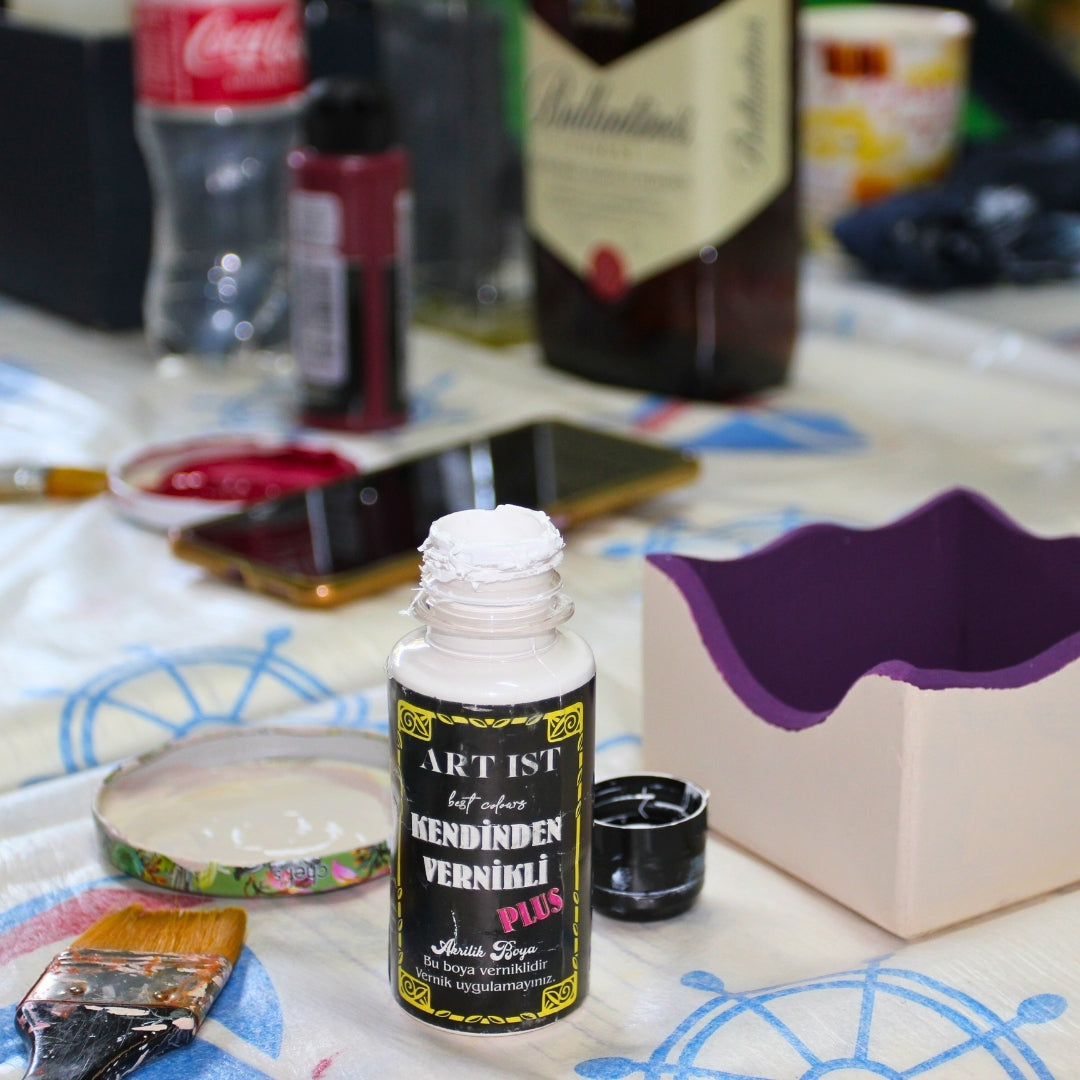
Wooden kitchenware gets washed often and handled constantly, so it demands high durability. The Multisurfaces hybrid range gives strong adhesion and durability on wood. Browse our acrylic paints for colours. Always use a varnish for protection; on anything that gets wet, it's essential.
What you'll need
- A wooden kitchen item (spoon, board, plate, panel)
- Durable acrylic or hybrid paint
- Fine sandpaper (220-240 grit)
- Fine and flat brushes
- Masking tape (for the painted/unpainted boundary)
- Waterproof varnish
- A clean cloth
Step by step: painting wooden kitchenware
1. Clean and sand it
Wash the item and dry it completely. Smooth the surface with fine sandpaper; this both helps the paint grip and reduces the risk of splinters. Wipe off the dust.
2. Decide on the painted area
Mark the boundary between the areas to be painted and left bare with masking tape. On a spoon, for example, run the tape where the handle ends; that way no paint gets onto the bowl and the line stays crisp.
3. Paint in thin coats
Apply the paint along the grain, in thin coats. The first coat gets absorbed; 2-3 thin coats give full, vivid colour. Wait for each coat to dry. Pattern, colour block, ombré or dots — your imagination is the only limit.
4. Remove the tape and let it dry
Pull the tape away slowly while the paint is still slightly damp (for a crisp edge). Then leave the item to dry completely.
5. Protect it with a waterproof varnish
Apply one or two thin coats of varnish over the painted area. Varnish protects the paint against washing, moisture and wear. Again, leave the areas that touch food bare; you can treat those with a food-safe natural wood oil (food-grade mineral oil, for instance).
Use and care
- Wash painted wooden kitchenware by hand, gently.
- Avoid the dishwasher and long soaking (both damage the wood and the paint).
- Don't use abrasive sponges or harsh detergents.
- If it goes dull over time, refresh the painted area with a thin coat of varnish.
Project ideas
- Serving spoons with pastel-coloured handles (they look lovely in a kitchen)
- A chopping or serving board with a gold-leafed edge
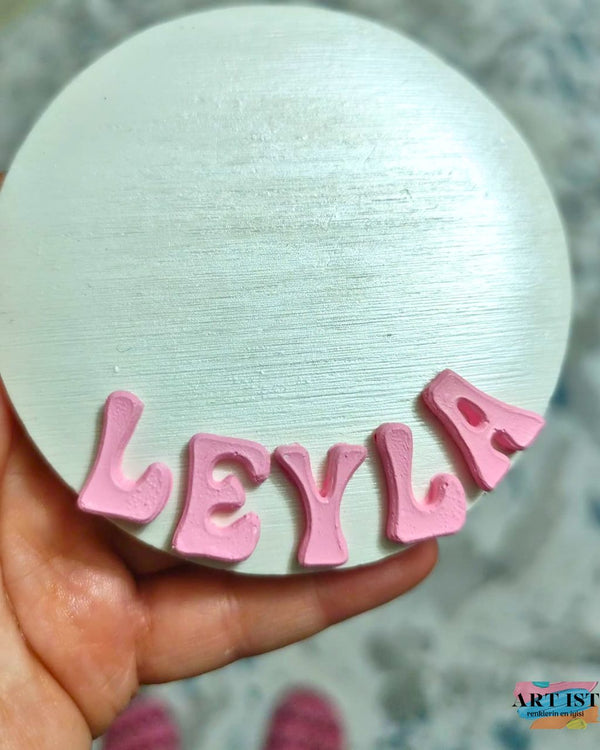
- A decorative kitchen board with lettering or a pattern
- A gift set of wooden cutlery with coloured handles
- Painted wooden coasters
For a luxurious touch, you can add liquid leaf or metallic tones along the edges.
Common mistakes
- Painting the food area: Unsafe; handles and outer surfaces only.
- Leaving it unvarnished: The paint is damaged at the first wash.
- Putting it in the dishwasher: Both paint and wood deteriorate quickly.
- Skipping the sanding: The paint won't grip and splinters remain.
- Thick coats: Runs and long drying times.
Frequently asked questions
Can the food end of a wooden spoon be painted?
No. The area that touches food and the mouth must be left bare; only the handle and outer surfaces are painted. The food area can be treated with a food-safe wood oil.
Can I use a painted chopping board?
Don't paint the cutting surface; decorate only the edges and handle. Protect the painted part with varnish and wash it by hand.
Does the paint come off in the wash?
Protected with varnish and washed gently by hand, it lasts a long time. The dishwasher and harsh cleaning wear the paint away.
Which paint is most durable?
Hybrid acrylics (such as Multisurfaces) give high adhesion and durability on wood; adding varnish over the top extends their life.
Are there any restrictions on decorative boards?
No. You can paint and varnish purely decorative items that never touch food however you like.
Painting wooden kitchenware is the most enjoyable way to bring handmade character into your kitchen. Follow the safety rule (leave the food area unpainted), choose a durable paint and protect it with varnish — even an ordinary spoon can become the star of your kitchen. Choose your colours and begin!