Distressing is one of the most enjoyable ways to give a new piece an aged, vintage feel. With water-based paints you can do it at home, easily and without any smell. Here's the basic technique in five steps.
What you'll need
- Two acrylic paints, one light and one dark
- A brush and a sponge
- Sandpaper (a sanding cube, for example)
- Varnish (a matte finish suits distressing beautifully)
1. Prepare the base
Dust off the surface and take the shine off it if it's glossy. Apply the dark tone as your base and let it dry completely.
2. Apply the top coat
Apply the light tone as a second coat. This is the colour that will come away when you sand, revealing the layer beneath.
3. Sand it back
Lightly sand the top coat on edges, corners and anywhere that would wear naturally; as the darker tone shows through, the aged effect appears. Sand a little and check as you go — adding more back is easier than taking too much off.
4. Optional: an antiquing glaze
Take a little of a very dark tone on an almost-dry brush, work it into the recesses and grooves, then wipe it straight off with a cloth. It adds a real sense of depth.
5. Seal it with varnish
Once dry, seal it with matte varnish. It both protects the piece and gives it that smooth vintage texture.
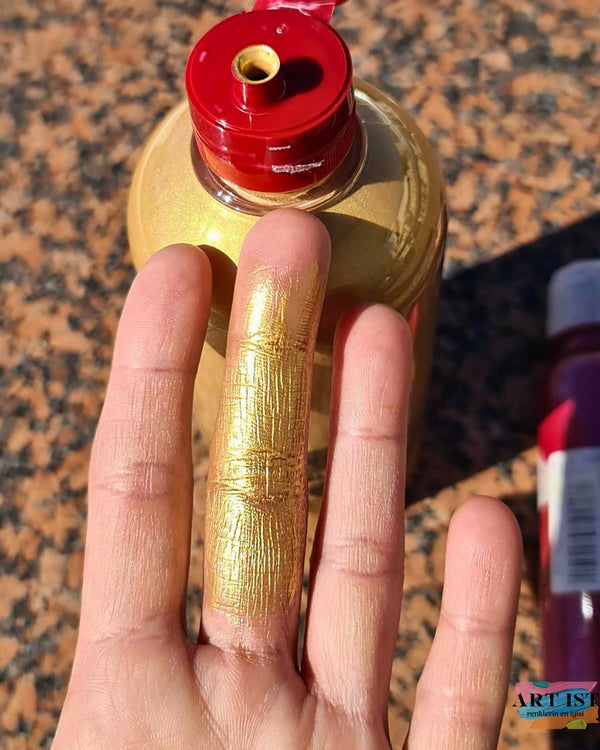
For more texture, take a look at our mediums and extras, and for shimmering finishes at our metallic colours. Have fun!